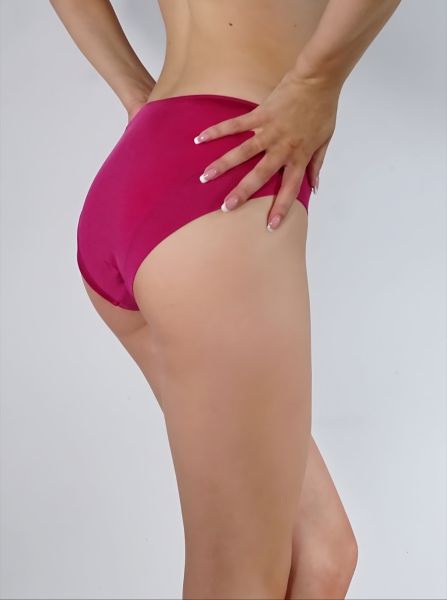


We buy quality lingerie. We wear it carefully. And yet after a few months we notice it starting to lose its appeal — colours fade, elastic begins to sag, lace no longer looks the same. It's no coincidence. Delicate lingerie doesn't deteriorate on its own — it deteriorates because of habits that seem completely harmless at first glance.
As manufacturers with 25 years of experience, we craft every piece with a clear understanding of what each fabric needs and what damages it. We've seen quality pieces lose their shape after just a few months — not because of poor quality, but because of improper care. Here are the 7 things that silently destroy fine lingerie.
1. Washing at high temperatures
It seems logical — higher temperature means cleaner. For cotton bed sheets and towels — yes. For lace briefs, microfibre and tulle — no.
High temperatures destroy the elastic fibres in the waistband and the threads of the lace. The process is slow and irreversible — the elastic gradually loses its ability to spring back, the lace begins to fray at the seams. By the time we notice it, the damage is already done. It's important to know that the damage isn't visible after the first wash — it builds up gradually, until one day we simply find that our favourite piece no longer looks like itself.
The solution: maximum 30°C, delicate wash programme.
2. The spin cycle
Quick, convenient, saves drying time. And just as destructive for delicate fabrics.
At high speed, the spin cycle doesn't just squeeze out water — it twists and distorts the fibres. Microfibre loses its smoothness, lace tears at the decorative details, elastic deforms and no longer returns to its original shape. Every spin cycle is one more step towards the end of your favourite lingerie. The higher the speed, the greater the mechanical force on the fibres — and delicate fabrics are not designed to withstand such stress.
The solution: turn off the spin cycle. Remove the lingerie wet and leave it to drain on its own.
3. The tumble dryer
The heat in the tumble dryer acts as an extension of the washing machine — shrinking the fibres, stiffening the lace, distorting the shape.
All elastic fabrics are sensitive — fabrics containing elastane lose their qualities when exposed to high temperatures. It doesn't happen all at once, but gradually and imperceptibly the elasticity decreases and the fabrics begin to sag. Elastic fabrics simply don't like heat. The difference from the washing machine is that the dryer acts while the fabric is in motion and under tension — a doubly aggressive combination for elastic fibres.
The solution: air dry only, away from direct sunlight — it fades colours just as effectively as bleach.
4. Fabric softener
It sounds paradoxical — isn't fabric softener designed to care for fabrics? Yes, but not all of them.
Fabric softener coats elastic fibres with a thin layer that blocks their stretch. With elastane fabrics, the effect builds up with every wash — the elastic fibres gradually loosen, the fabric loses its shape, elasticity stops working the way it should. Particularly sensitive are microfibre and tulle pieces — softener also destroys the specific structure of the fibres that makes the fabric so smooth and lightweight. If you ask us, fabric softener exists only to sell yet another product that adds more chemicals to our clothes.
The solution: no fabric softener for delicate lingerie. None whatsoever.
5. Washing with other clothes
Jeans, shirts with buttons, hoodies with zips — all of this together with delicate lingerie is a recipe for torn lace or damaged tulle.
The metal details on clothes act like sandpaper as the drum spins. Add the difference in weight — heavy clothes mechanically press and distort lighter fabrics. The result shows quickly — broken threads in the lace, deformed elastics, worn decorative details that can no longer be restored. A mesh laundry bag is perhaps the cheapest investment in caring for your lingerie — it costs next to nothing but saves many times more.
The solution: wash lingerie only with lingerie, in a mesh laundry bag. It protects lace Brazilian briefs and fine decorative details even when we've forgotten to turn off the spin cycle.
6. Improper storage
Fine lingerie doesn't like to be compressed and crumpled. Elastic left folded under the weight of other garments in a drawer gradually loses its shape — not from wearing, but from sitting there.
Pieces made from fine elastic fabrics are particularly sensitive — delicate fabrics remember the shape in which they were stored, and over time stop returning to their original form. Nightdresses, corsets and slips, whether made from microfibre, tulle, lace or cotton, should be stored gently folded, without being crushed or compressed, with enough space to breathe.
The solution: store neatly, not compressed and crumpled.
7. Hard water
This is the enemy we think of least.
In many regions, water is rich in calcium and magnesium. An easy way to tell if your water is hard — if white deposits form around taps and in the shower cubicle, the answer is yes. During washing, these minerals settle into the fabric fibres — especially at higher temperatures. The result builds up slowly: lingerie gradually loses its softness, begins to feel harder to the touch and loses its gentle feel. The effect is particularly noticeable with cotton pieces — cotton absorbs minerals more easily than synthetic fabrics and hardens more quickly. With microfibre the change is more subtle, but it's still there — the fabric loses its characteristic smoothness.
The solution: with hard water, add a little vinegar to the fabric softener compartment — it dissolves mineral deposits without damaging the fibres. Two to three tablespoons per wash is sufficient.
In short
Quality lingerie is made to be worn for a long time — if we know how to care for it. Low temperature, delicate programme, no spin cycle, no tumble dryer, no fabric softener, a mesh laundry bag and proper storage. Seven simple steps that keep our favourite lingerie looking its shape, colour and elasticity for not months, but years.
1. Washing at high temperatures