
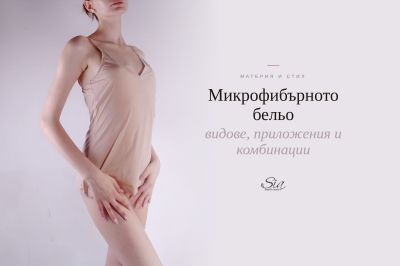
Elastic microfiber is perhaps the most widely used fabric in women's lingerie today. Smooth, light and practically invisible under clothing — it sounds like the perfect solution for every situation. And yet not all microfiber is the same, and not every situation calls for this fabric. Understanding the differences makes choosing much easier and turns every purchase into a sound investment.
What microfiber is and why it feels so good
This fabric is built from exceptionally fine fibres — far thinner than cotton or silk. The fibres are so fine that the surface becomes incredibly smooth and dense, and combined with elastane, the garment literally takes the shape of the body. The result is a fabric that glides against the skin without friction, holds its shape after washing and stays soft and gentle for a long time.
A note worth making: we're talking about microfiber for lingerie — a fabric that contains a specific percentage of elastane, providing the necessary stretch in both directions. Non-elastic microfiber fabrics exist too, but they serve entirely different purposes. Lingerie requires stretch — and it's the combination of microfiber and elastane that makes all the difference.
Quality microfiber on a polyamide base is elastic, durable and comfortable to wear. The cheaper polyester version feels stiffer, traps heat in warm weather and loses its shape more quickly. The difference is apparent from the very first wear — and it's exactly what separates quality lingerie from mass-produced alternatives.
Types of microfiber for lingerie — density, elasticity and purpose
Not all microfiber fabrics are the same. The range is wide and each type serves a specific purpose.
Ultra-fine microfiber is light, with a delicate silky sheen and minimal thickness. Under fitted clothing it's practically invisible — no visible lines, no added bulk, no sensation of wearing anything at all. This is the fabric at the heart of styles designed to disappear under clothes.
Medium-density microfiber is the versatile option — light enough for everyday wear, stable enough for a more active day. No shine, no heaviness, works in most situations without any specific requirements.
Dense, firm microfiber is a different category entirely — a heavier fabric with more support and a shaping effect. This is the fabric behind shapewear lingerie. The options here are many depending on the desired result — from light abdominal compression to a more sculpting effect. Choosing the right fabric is never random. When developing each lingerie style, the density, elastane content, structure and colour are selected according to its specific purpose. A style designed to be invisible under clothing requires a different fabric from one with a shaping effect. That precision and attention to detail is what sets truly quality lingerie apart.
Combinations with lace and tulle — why they work so well
One of microfiber's greatest strengths is how well it combines with other polyamide-based fabrics — elastic laces and tulles. All three share the elasticity and flexibility of polyamide, which means they move with the body without deforming or stretching unevenly.
In practice, this produces some of the most beautiful and functional combinations in women's lingerie. A smooth microfiber front panel — invisible under clothing — paired with a lace or tulle back that adds character and visual interest. Or the reverse — lace and tulle details at the front combined with microfiber for better support and function. The possibilities are endless and always look good.
Tulle adds lightness and gentle sheerness; lace adds texture and design. It's no coincidence that most of the finest luxury lingerie styles are made from microfiber combined with lace and tulle — the fabrics complement each other perfectly, delivering both practicality and luxury in equal measure.
Under which clothes does microfiber lingerie work best
This fabric is made for situations where lingerie needs to disappear. Under tailored trousers, under a fitted dress, under a fine blouse — the ultra-fine variant leaves no seams, no lines, no visible transition. That's why it's the preferred choice for formal occasions and for garments in fine knit fabrics.
Microfiber bikini briefs and microfiber Brazilian briefs with a smooth front panel are the classic choice under fitted clothing. Microfiber boyshorts add coverage without bulk — ideal under fuller skirts and dresses. The microfiber camisole is virtually invisible under a shirt or blouse where a cotton version would add an unwanted extra layer.
Microfiber or cotton — how to choose
The two fabrics don't compete — they solve different situations. Cotton is a natural fabric that breathes and absorbs moisture — the right choice for sensitive skin and when maximum comfort against the skin is a priority. Microfiber draws moisture away rather than absorbing it — it dries much faster, which makes it the preferred choice in warm and humid conditions. It's no coincidence that all swimwear is made from it.
For sensitive skin and maximum breathability — cotton is the better choice. For a smooth silhouette, quick drying and invisibility under clothing — microfiber is the one. For everyday wear without specific requirements — both work equally well.
Caring for microfiber lingerie
This fabric is durable but needs the right care. Hand wash or a gentle machine cycle at low temperature — no spin, no tumble dryer, no iron. Leave to dry naturally, away from direct sunlight. Elastic fibres don't respond well to heat, whether from the sun or a dryer. Fabric softeners are best avoided too — they coat the fibres and reduce elasticity over time. With the right care, quality polyamide microfiber holds its shape, sheen and stretch for a long time.
Microfiber lingerie — a practical and comfortable everyday choice
Microfiber lingerie is one of the most practical and comfortable choices in a woman's wardrobe. It's worn without being felt, looks good under any garment and lasts well. Whether we're looking for an invisible everyday style, a luxurious combination with lace, or a shaping effect — this fabric has an answer for every situation. The SIA Underwear collection offers microfiber styles on a polyamide base — in different densities, for different needs, in sizes S to 6XL, made in Bulgaria with care and love.
What microfiber is and why it feels so good
Types of microfiber for lingerie — density, elasticity and purpose
Combinations with lace and tulle — why they work so well
Under which clothes does microfiber lingerie work best
Microfiber or cotton — how to choose
Caring for microfiber lingerie
Microfiber lingerie — a practical and comfortable everyday choice